
Do You Need a Permit to Remove a Tree in Jacksonville, FL?

October 20, 2026

It depends on the tree, the property, and the reason for removal. Jacksonville has local tree protection rules, and certain trees or sites can require review before work begins. Confirm the current requirements with the City of Jacksonville before you remove a large or protected tree.

Why Local Rules Matter

Removing a tree without required approval can lead to fines, replanting requirements, or delays in a home sale or construction project. The rules are easy to check before you cut and expensive to fix afterward. A short call to the city can save a great deal of trouble.

Situations That Often Need a Closer Look

Certain trees and properties tend to draw more attention from local authorities:

•      Large or heritage trees, especially those above a certain trunk diameter.

•      Protected species, which may be treated differently from common ornamental trees.

•      Properties under development or construction, where tree preservation is often part of site plans.

•      Sites near wetlands, waterways, or conservation land, which can carry extra rules.

Your neighborhood may also have its own rules. Many homeowners associations have covenants that govern tree removal, even when city rules do not.

Emergency Removal Is Different

When a tree is an immediate hazard, such as one leaning on a home or blocking a road, safety comes first. Call a professional and document the damage with photos. After the emergency, confirm with the city whether any reporting or follow-up is required. A licensed arborist can also help you describe the situation accurately.

Steps to Take Before You Cut

1.     Identify the tree. Note its species, approximate size, and location on the lot.

2.     Check city requirements. Contact the City of Jacksonville's permitting or planning office with the address and tree details.

3.     Check your HOA or deed restrictions. Private covenants can apply in addition to city rules.

4.     Review your insurance policy. Know what is covered and document the tree's condition first.

5.     Hire a licensed, insured company. Ask for written proof of insurance and a clear scope of work.

Frequently Asked Questions

  • Who do I contact about tree removal permits in Jacksonville?

    Start with the City of Jacksonville's permitting or planning office. Staff can confirm whether your specific tree or property needs review.

  • Can I remove a dead tree without a permit?

    Dead or hazardous trees are sometimes handled differently from healthy ones, but the rules can still apply. Confirm with the city before you cut.

  • Do HOA rules apply if the city doesn't require a permit?

    Yes. HOA covenants are separate from city requirements, and both should be checked before removal.

Not sure whether your tree needs review? Call (904) 388-9960. Our arborists can assess the tree and help you understand your next steps.
October 20, 2026
A tree fell or was damaged in a storm? Follow these safety steps, document the damage for insurance, and know when to call a 24-hour emergency tree service.
October 20, 2026
Tree removal in Jacksonville usually costs more for large trees, trees close to a home or power lines, and trees that are hard to reach. Because every property is different, the most accurate number comes from an on-site estimate. This guide explains what drives the price so you know what to expect before you call. The Main Factors That Set the Price No two removals are identical. These are the factors that most affect what a professional quote includes: • Tree size and height. Taller trees with wide canopies take longer to take down safely and often need more equipment. • Proximity to structures. A tree that can drop straight to the ground is simpler than one that has to be lowered in sections between a roofline, a fence, and a pool. • Condition. Trees with decay, cracks, or a new lean are harder to predict under load, so they often require more careful rigging. • Access. Narrow side yards, locked gates, and steep or wet ground all add labor time. • Scope of work. A quote may cover felling and removal only, or include limb cleanup, debris hauling, and stump grinding. • Urgency. Emergency work after a storm is scheduled around immediate hazards and high demand, which can change how it is priced. Why a Free Estimate Beats a Phone Quote A photo or a description can't show a leaning trunk, hidden decay at the base, or a power line running through the canopy. A site visit lets an arborist see the full picture and write a quote that matches the actual job. Shaw's Tree Service offers free estimates, so you can compare the scope of work, not just the bottom-line number. Ways to Keep Costs Under Control • Schedule before storm season. Planned work is easier to fit into a crew's calendar than emergency removal after a storm. • Ask whether trimming is enough. Pruning can reduce risk for a healthy tree without the expense of removal. • Bundle services. Removal and stump grinding booked together are often easier to coordinate than two separate jobs. • Compare scope, not just price. Make sure each quote states cleanup, debris removal, and insurance coverage. Is Tree Removal Covered by Homeowners Insurance? It depends on the policy and the cause. Coverage often applies when a tree falls because of a covered event, such as a storm, and damages an insured structure. Removing a tree simply because it is old or unwanted is usually not covered. Review your policy and call your insurer before work begins. Frequently Asked Questions
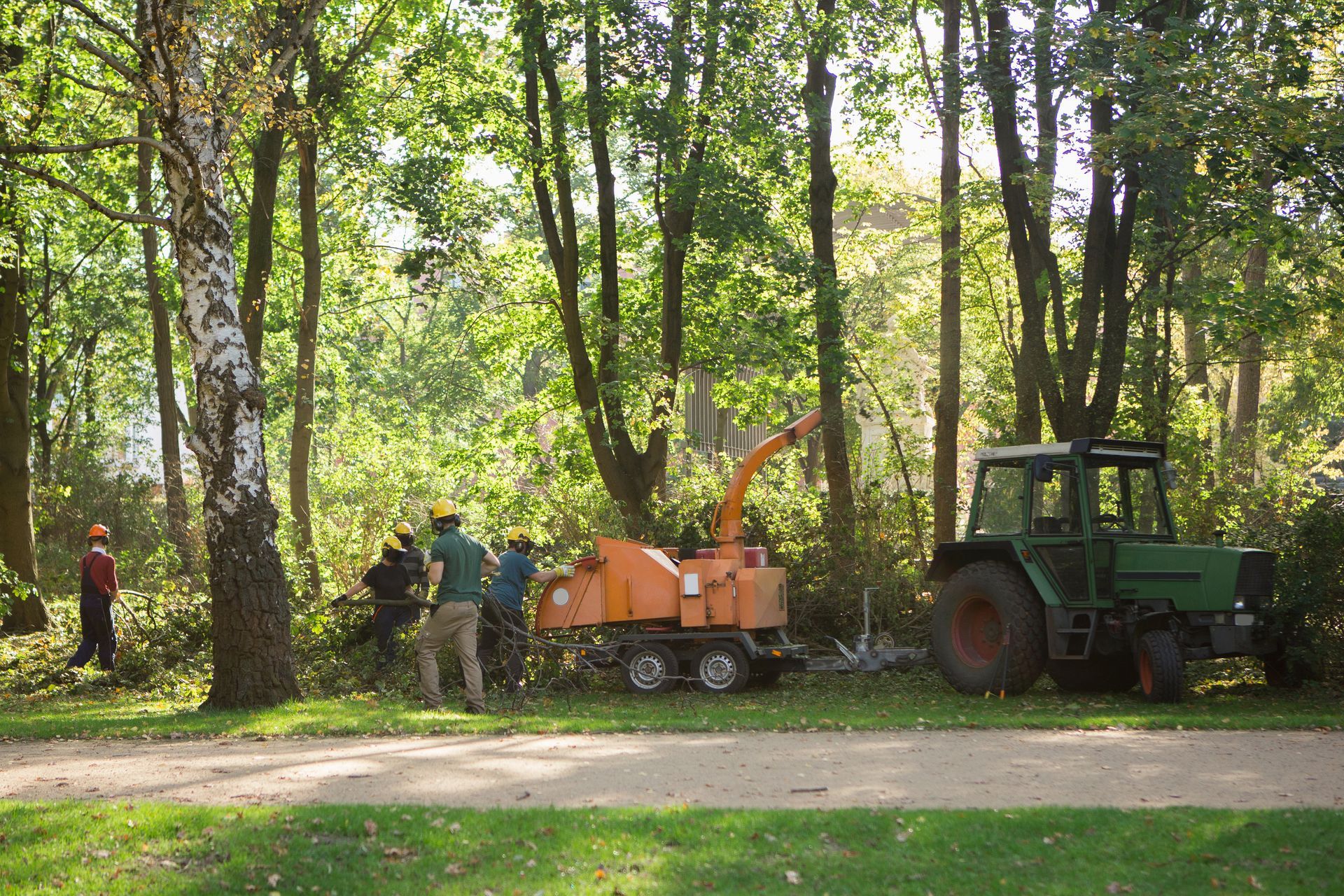
Workers and a green tractor with orange equipment in a wooded park area
September 8, 2026
Learn the warning signs of a hazardous tree before hurricane season hits North Florida. Tips from Shaw's Tree Service on storm-proofing your yard.